Lightweight
About 99% lighter than glass — leaner structure and easier large-span planning for office building roof fields.
Office Building ETFE Roofing
Lightweight Office Building ETFE Roofing for daylight-rich workplaces — skylights and roof systems engineered, supplied and installed by AAKS Architecture.
Overview
Office buildings need skylights and roofs that deliver daylight-focused workplaces without glass-scale structural burden. Office Building ETFE Roofing uses fluoropolymer membrane systems — single-layer covers to multi-layer air cushions — for luminous atria, comfort and efficient envelopes.
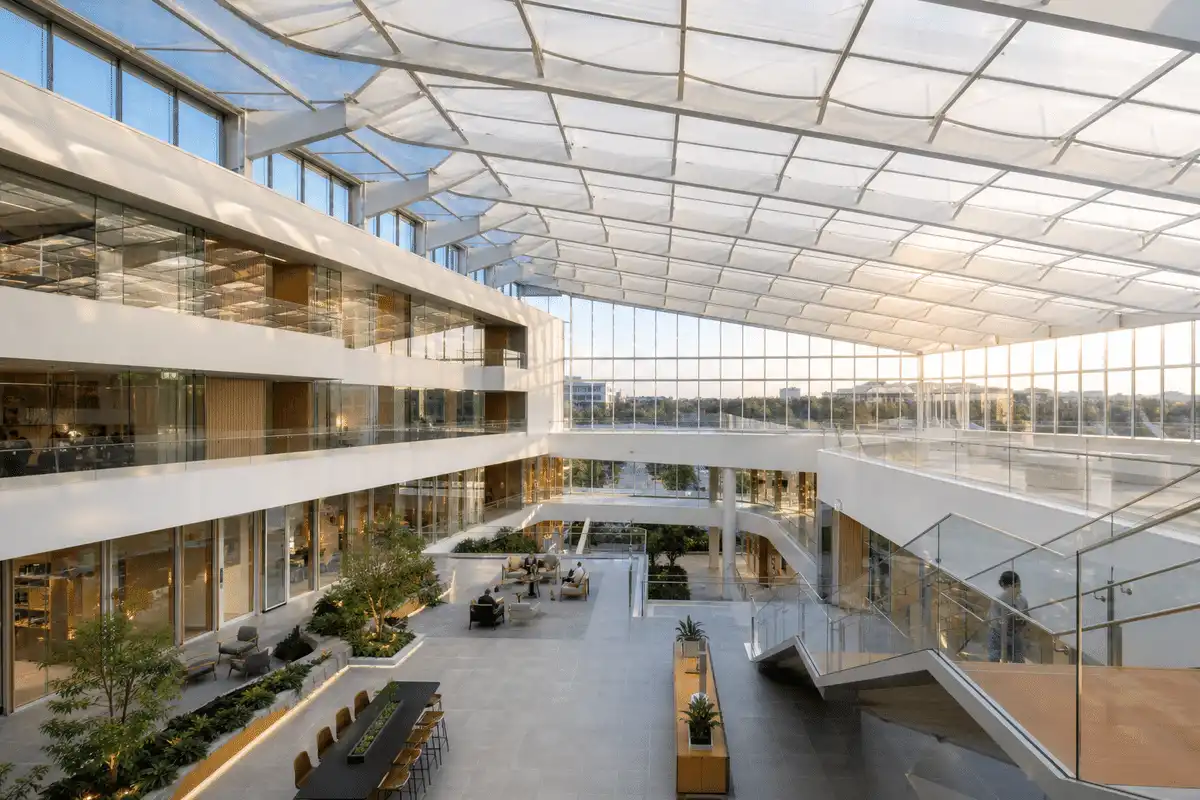
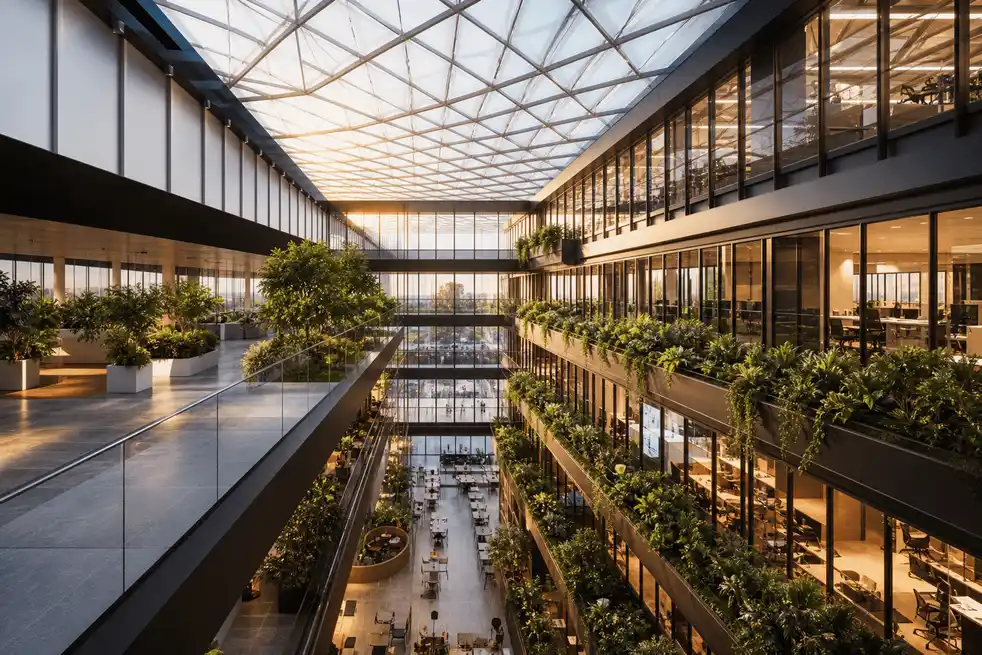
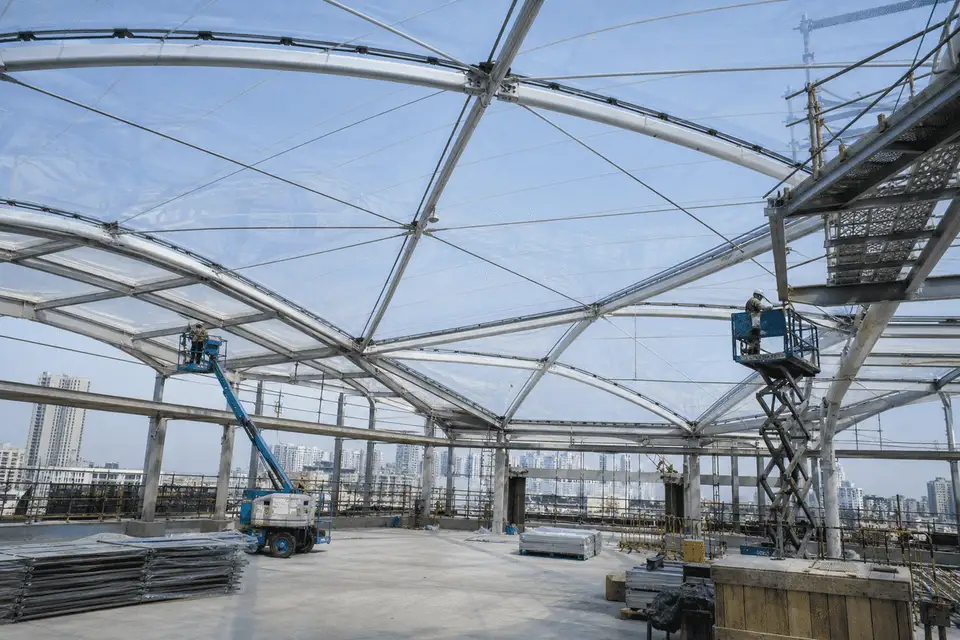
Office Building ETFE Roofing covers workplace atria, roof lights, entrance canopies and feature skylights where daylight-rich interiors matter. Build-ups combine ETFE film with steel or aluminium structure, clamps or cable nets, drainage and — for cushions — inflation plant. AAKS delivers concept through commissioning as one accountable package.
ETFE offers light transmission up to 95%, excellent UV and weather resistance, and typical service life of 25–35+ years. It is about 99% lighter than glass, so steel tonnage drops on atrium and roof-light fields. Multi-layer air cushions add thermal performance without glass-scale mass — supporting daylight-focused workplace envelopes.
Workplace briefs favour daylight quality, occupant comfort and lower structural cost on feature roofs. Office Building ETFE Roof systems combine prefabricated modules, pneumatic cushions, frit solar control and engineering for wind, snow and maintenance — delivered by AAKS from New Delhi for India and international markets.
Why ETFE
An Office Building ETFE Roof is a structural, environmental and workplace choice: less weight on atrium grids, more daylight for teams, and durable UV performance with solar-control options.
About 99% lighter than glass — leaner structure and easier large-span planning for office building roof fields.
Up to 95% daylight supports bright spaces and lower daytime lighting demand under a translucent office building roof.
Excellent UV resistance; does not yellow like some lower-quality plastics across multi-decade service life.
Film and cushion modules on grids or cable nets cover wide volumes with fewer intermediate supports.
Smooth film sheds dirt with rain; inspection still recommended, but cleaning burden is typically lower than glass.
Daylight, multi-layer cushions and fritted solar control help comfort and energy goals on office building projects.
Resists rain, snow, UV and extremes (−200°C to +150°C). Cushions can exceed 200 km/h wind when engineered.
Less steel, high daylight and long life support efficient envelopes — confirm against project frameworks.
Problem → Solution
Office envelopes must deliver daylight-rich workplaces, manage solar gain, and stay light yet durable. Office Building ETFE Roofing solves these with membrane engineering rather than thicker glass.
Glazed atria deliver daylight but impose high dead load and heavy steel on workplace frames.
Film and cushion modules allow leaner grids while keeping a luminous translucent ceiling plane.
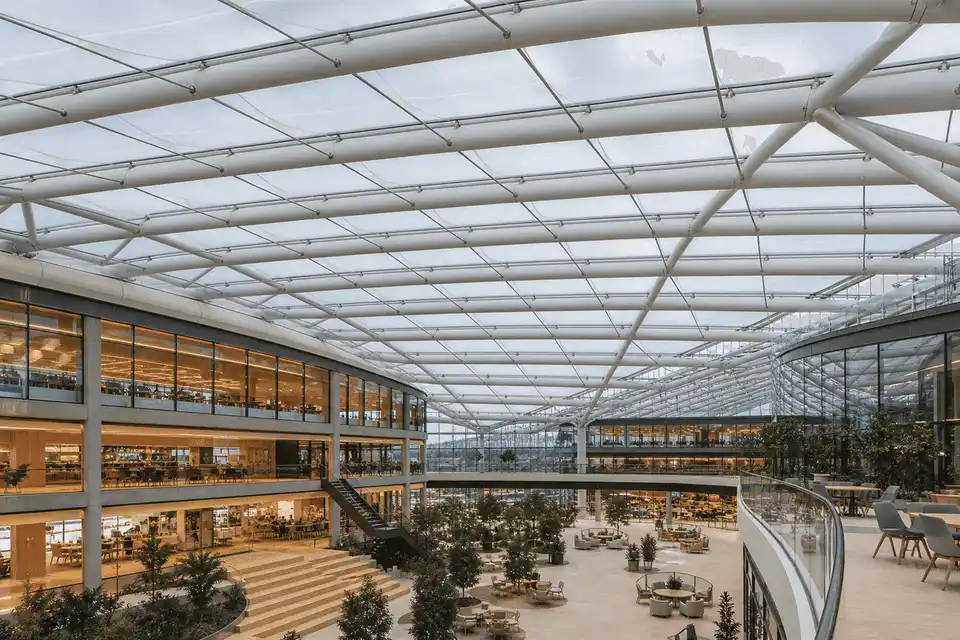
Opaque roofs deny daylight; uncontrolled glazing can raise cooling loads and visual discomfort.
Office Building ETFE Roof fields with frit or cushions keep atria bright without uncontrolled gain.
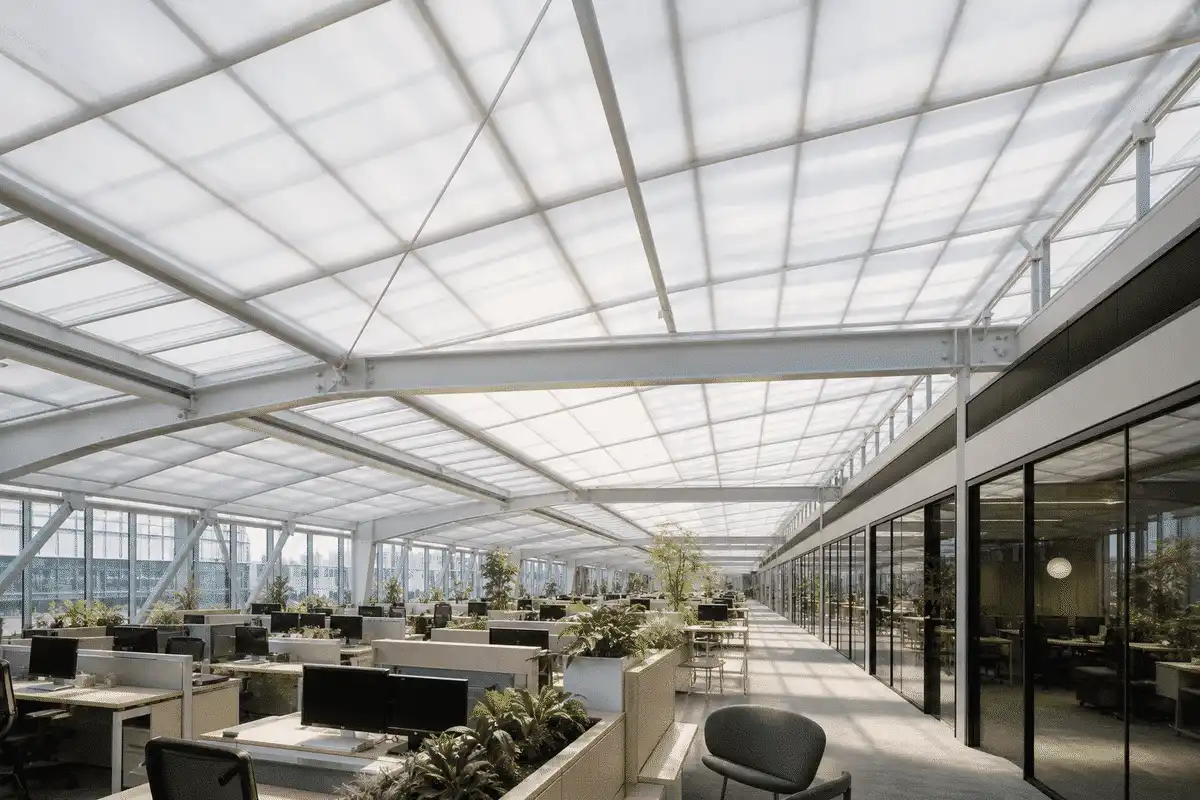
Office roofs need watertight, stable envelopes without constant intensive cleaning access.
ETFE resists rain, UV and extremes; cushions can be designed for high wind; smooth film sheds dirt with rainfall.
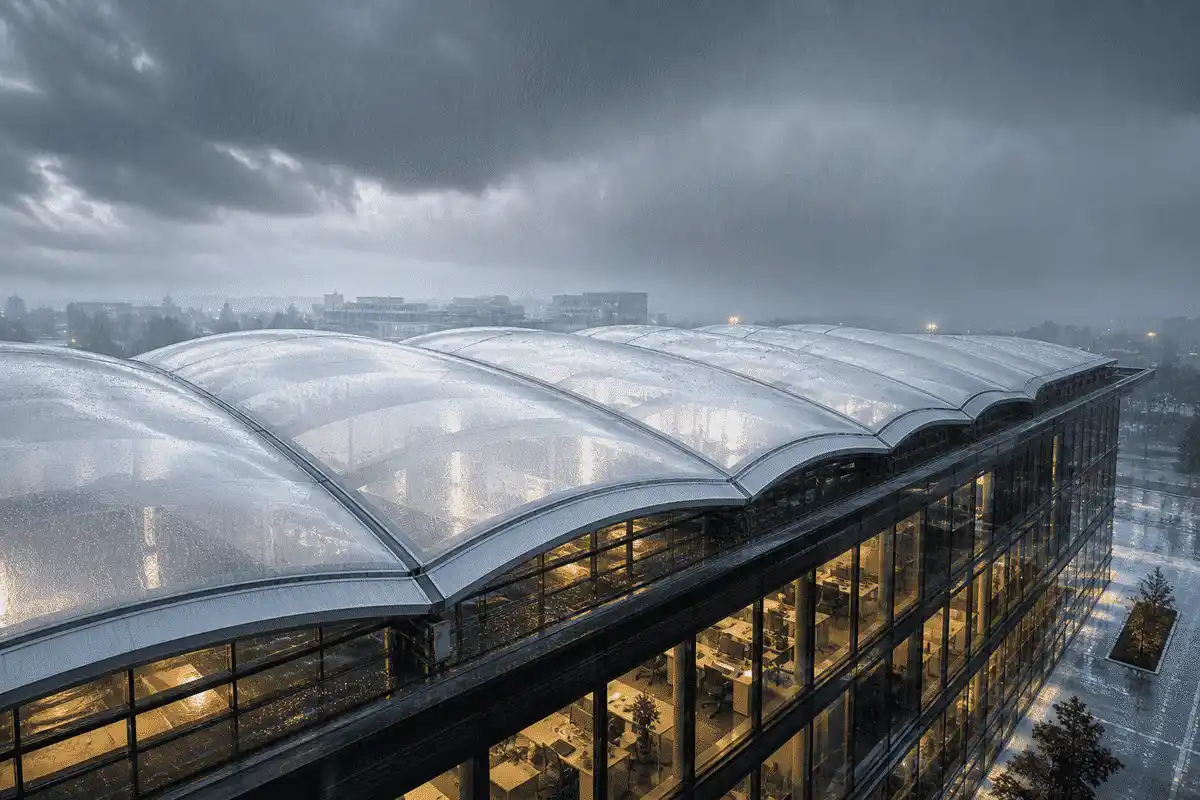
Signature office atria need curvature that glass struggles to follow without heavy faceting and cost.
ETFE forms over freeform supports when engineered — expressive yet buildable Office Building ETFE Roofing.
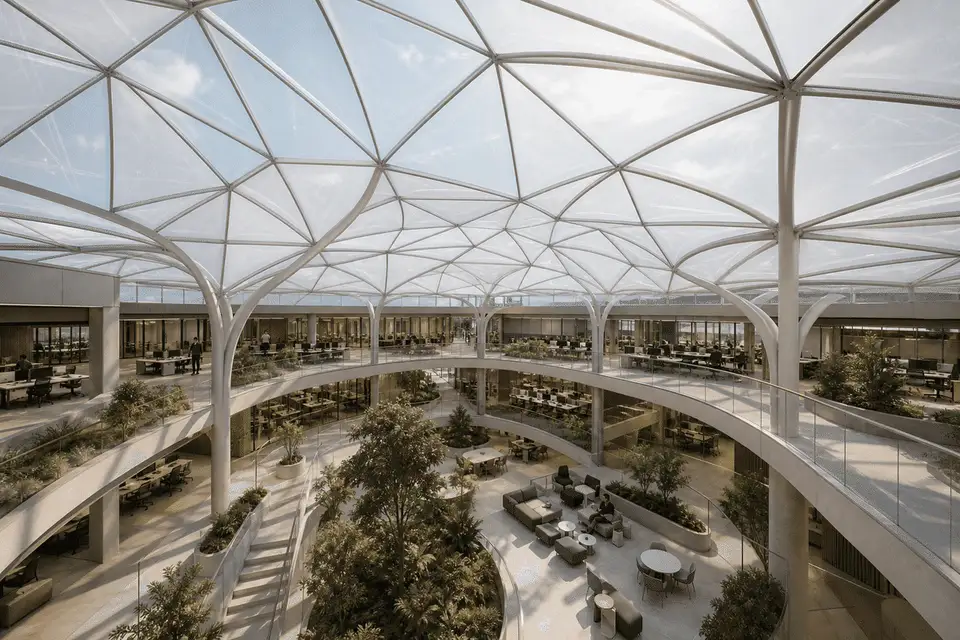
Recommended Products
Office programmes often combine skylights, cushions, roofs, façades and canopies. Explore AAKS ETFE products with office-fit notes below.
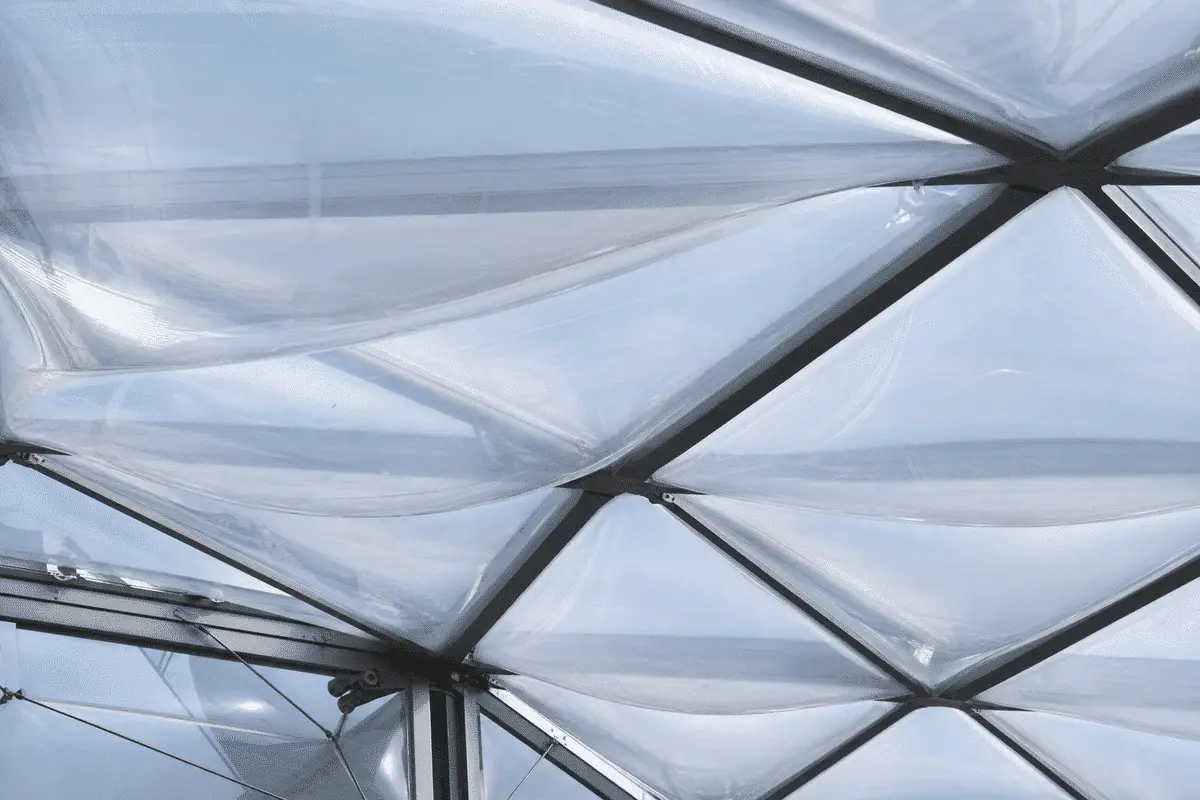
Membrane foundation for transparent and translucent office roof modules, prints and cushion layers.
View product →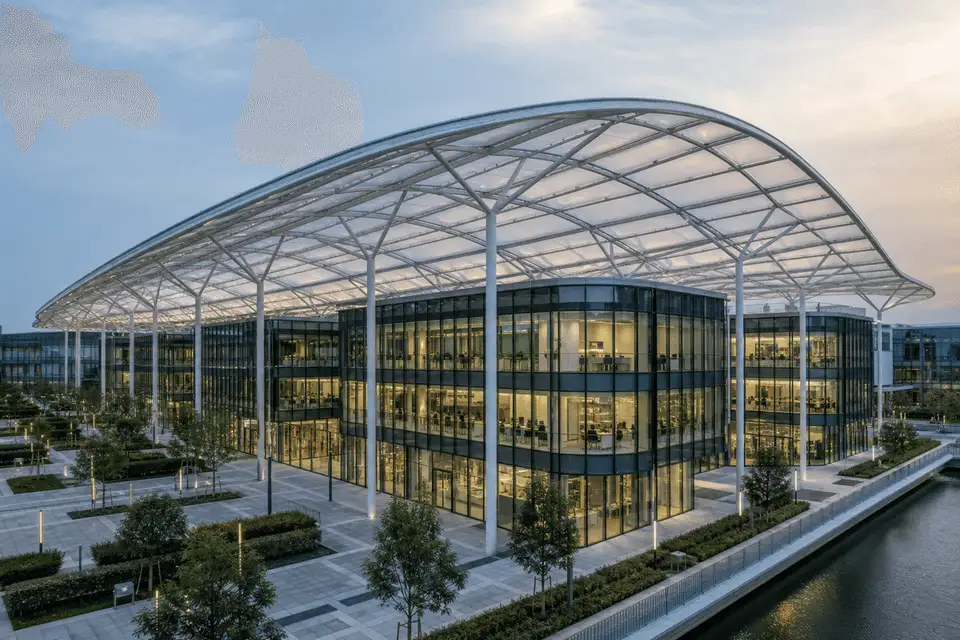
Large-span Office Building ETFE Roofing packages coordinating structure, drainage and membrane fields.
View product →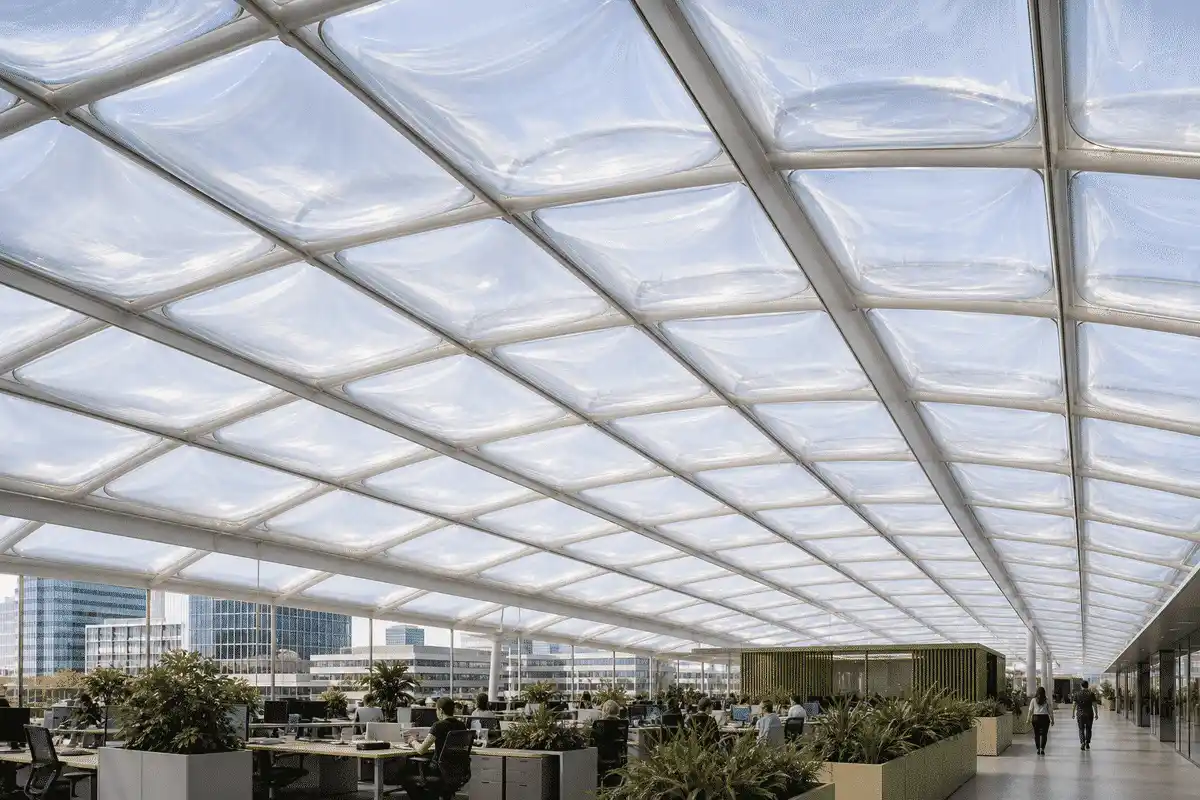
Multi-layer insulated cushions — strong choice for luminous, thermally improved workplace atria and skylights.
View product →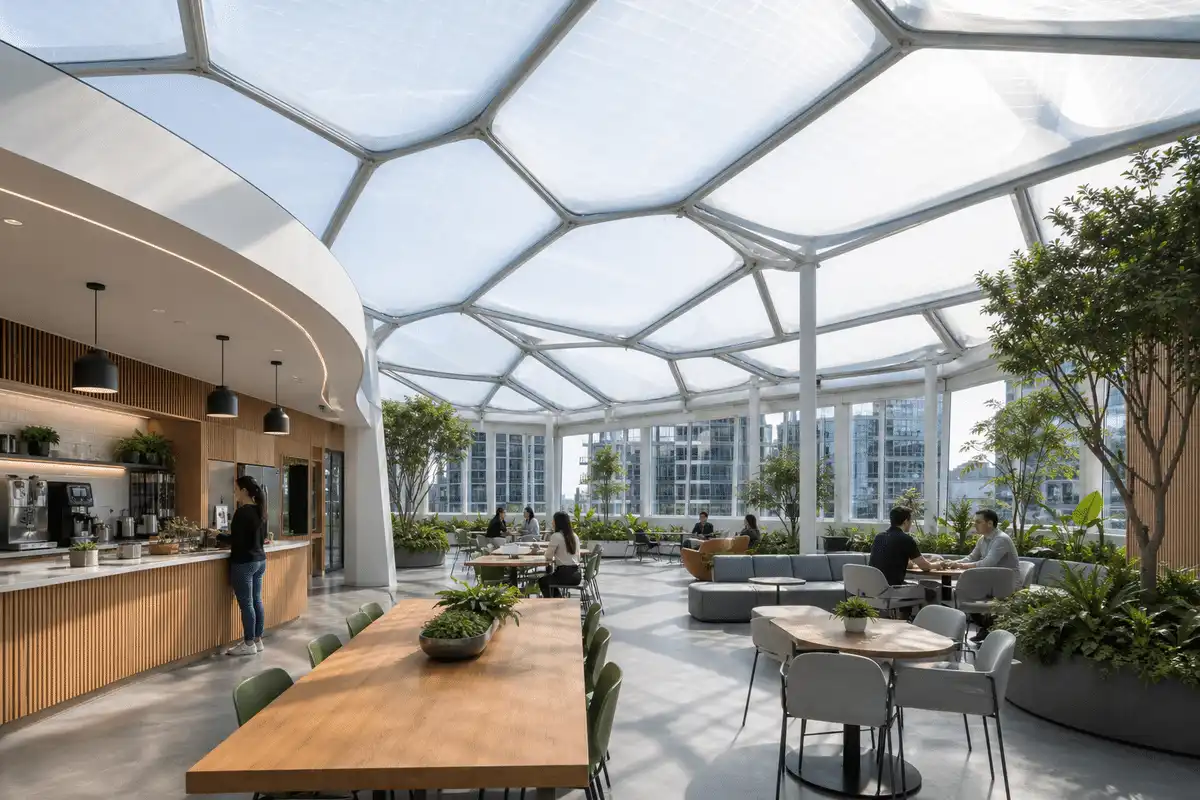
Daylight openings over atria and circulation where focused skylight strips are preferred.
View product →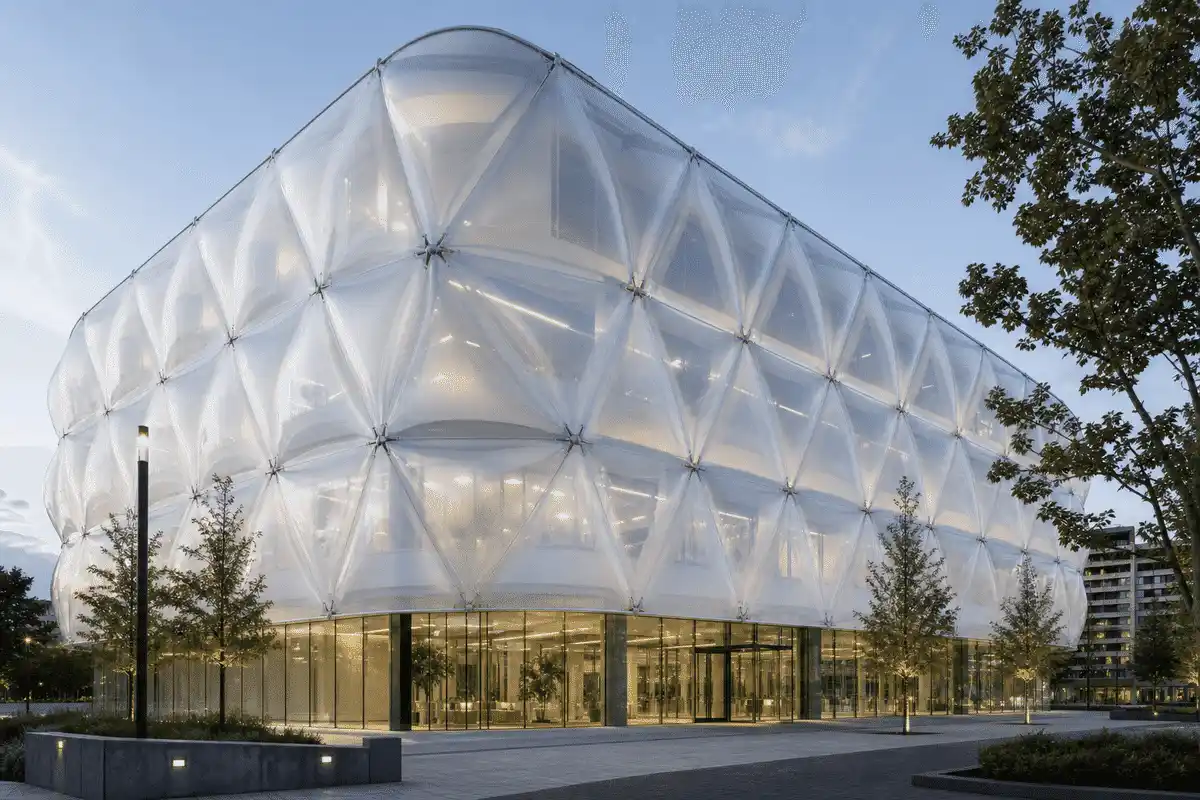
Lightweight luminous skins that continue the translucent office roof language vertically.
View product →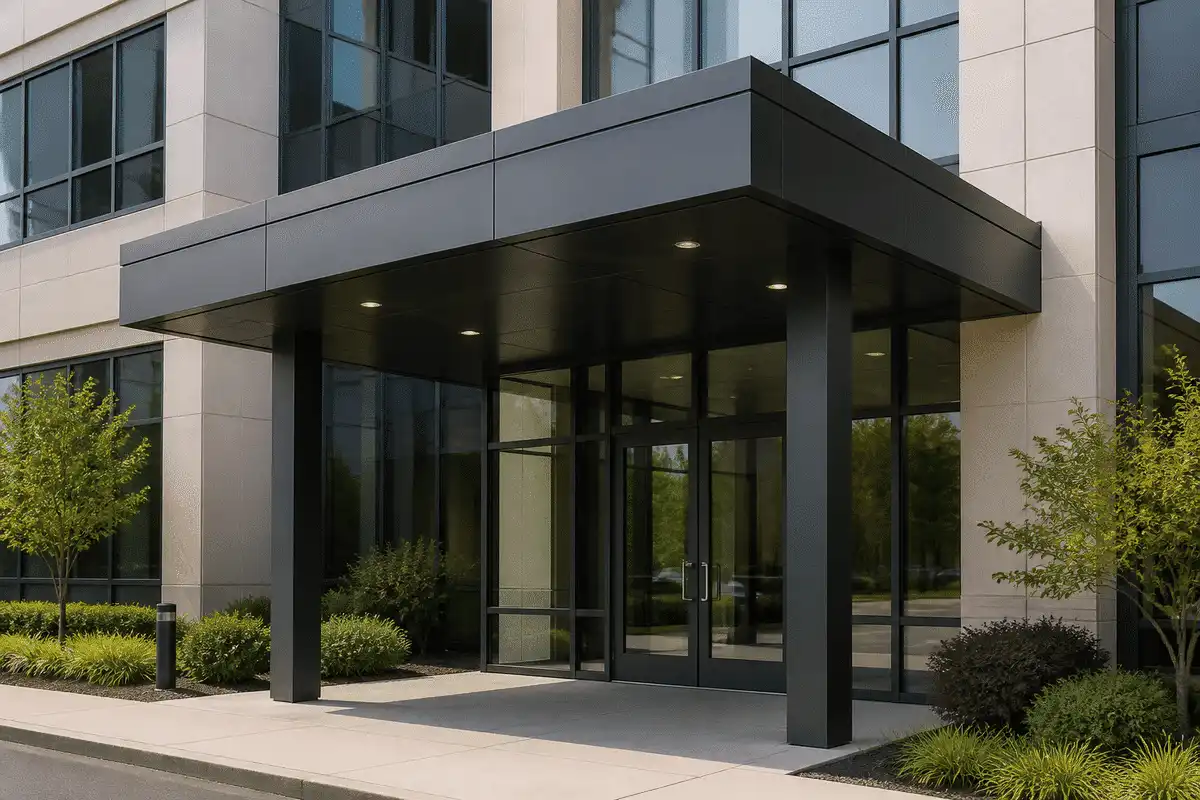
Entry and circulation canopies that shelter users and extend the ETFE aesthetic.
View product →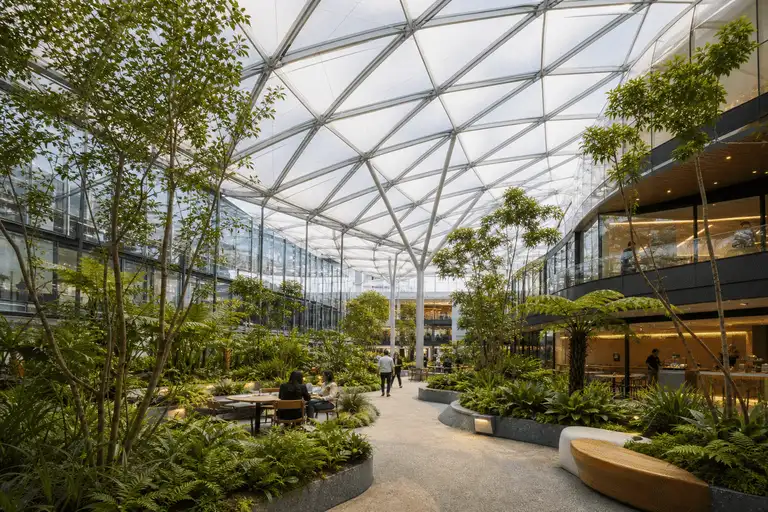
High-light climate envelopes for amenity gardens — same film technology, horticultural detailing.
View product →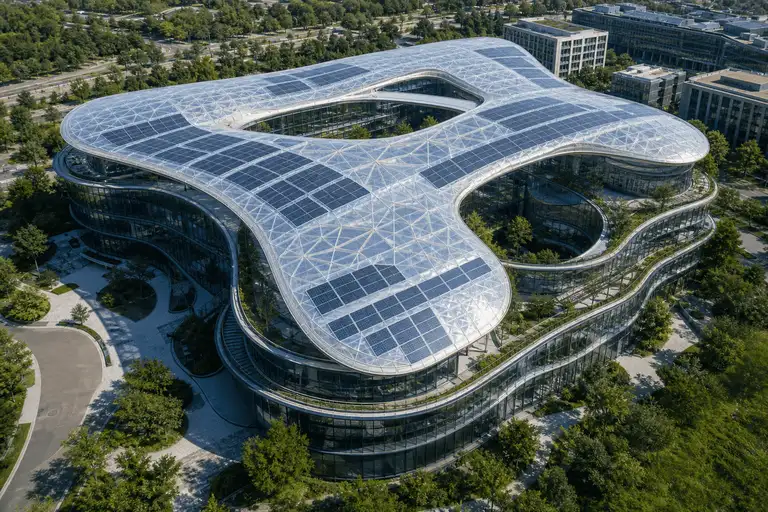
Transparent solar membrane options where energy-integrated performance joins the daylight brief.
View product →Performance
Typical guidance from AAKS knowledge — confirm project data sheets, wind studies and local codes before specification.
Low self-weight (~99% lighter than glass) reduces steel demand; flexible foil works with grids and cable nets.
Cushion systems can exceed 200 km/h depending on design. Wind is a core load case on every office building roof study.
Single-layer is basic; double-layer good; triple-layer excellent — chosen against climate and energy targets.
Self-extinguishing; does not promote flame spread. Final strategy follows tested systems and local codes.
Excellent resistance to rain, snow, UV and extremes; nearly zero water absorption.
Up to 95% natural light. Frit density and layer count drive office building optical results.
Daylight cuts lighting loads; cushions and frit help manage heating and cooling on office building projects.
Air cushions reduce external noise versus single foils when detailed correctly.
Self-cleaning behaviour, replaceable modules and inflation monitoring keep lifecycle care manageable.
Delivery
From concept to commissioned installation — Discover → Concept → Engineer → Fabricate → Install → Commission → Support.
Brief, span, climate and goals; select grid/cable geometry and single-layer vs air cushion strategy.
Wind, snow and temperature loads; patterning, clamps and inflation schematics; consultant coordination.
Film gauges, CNC cutting, welding, cushion assembly, factory QA and packing for site.
Structure checks, module install, sealing and interfaces with gutters, glass and upstands.
Inflation to design pressure, sensors, redundancy and watertightness reviews.
Handover, training, cleaning guidance, repair protocols and spare strategy.
Engineering Data
Typical guidance from ETFE introduction and thickness knowledge. Project data sheets always govern.
| Parameter | Typical Value |
|---|---|
| Thickness | Architectural films commonly ~100–300 μm (0.10–0.30 mm); layer role matters as much as gauge |
| Weight | Approximately 99% lighter than glass |
| Span | Large-span capability with engineered grids / cable nets (project-specific) |
| Light Transmission | Up to 95% natural daylight |
| Temperature Range | Working temperature approximately −200°C to +150°C |
| Wind Resistance | Cushion systems can exceed 200 km/h depending on design |
| Fire Rating | Self-extinguishing; does not promote flame spread (system & code dependent) |
| UV Resistance | Excellent; does not yellow under sunlight |
| Expected Life | 25–35+ years (design, environment & maintenance dependent) |
Disclaimer: Values are typical / manufacturer-dependent. Confirm project-specific data sheets before publishing or certifying specifications for any Office Building ETFE Roofing tender.
Value
Office Building ETFE Roofing concentrates value in daylight-rich workplaces, structure, comfort and lifecycle care for developers, architects and operators.
Luminous atria and skylights support healthier, brighter office environments.
Cover workplace voids without glass-scale dead load for leaner structure.
~99% lighter than glass supports efficient office frames.
Up to 95% light transmission with frit options to manage glare and gain.
Printed or fritted films help comfort while keeping translucent character.
Double and triple-layer cushions improve insulation versus single foil.
Strong resistance to rain, UV, storms and temperature extremes (−200°C to +150°C).
Rain washes deposits from smooth film on hard-to-access roof zones.
Freeform and double-curved geometry with the right support strategy.
Design–supply–install from New Delhi — info@aaksarchitecture.com · +91-9810882452.
Case Studies
Placeholders for future case studies — not named clients. Replace when verified releases are approved.
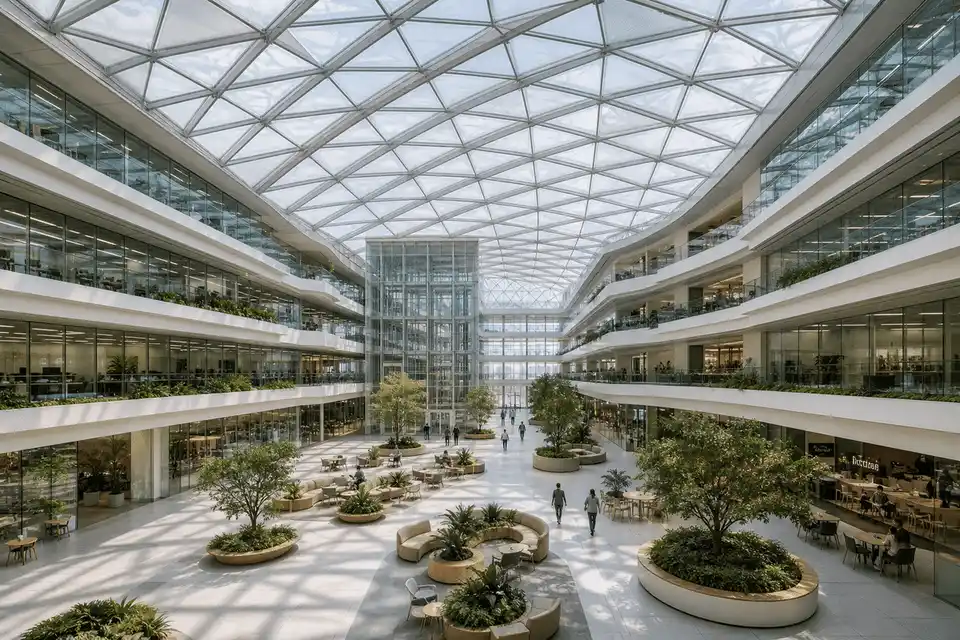
Location: To be confirmed · System: ETFE Air Cushion Roof
Placeholder: multi-layer cushion field over a workplace atrium with steel, drainage and inflation controls.
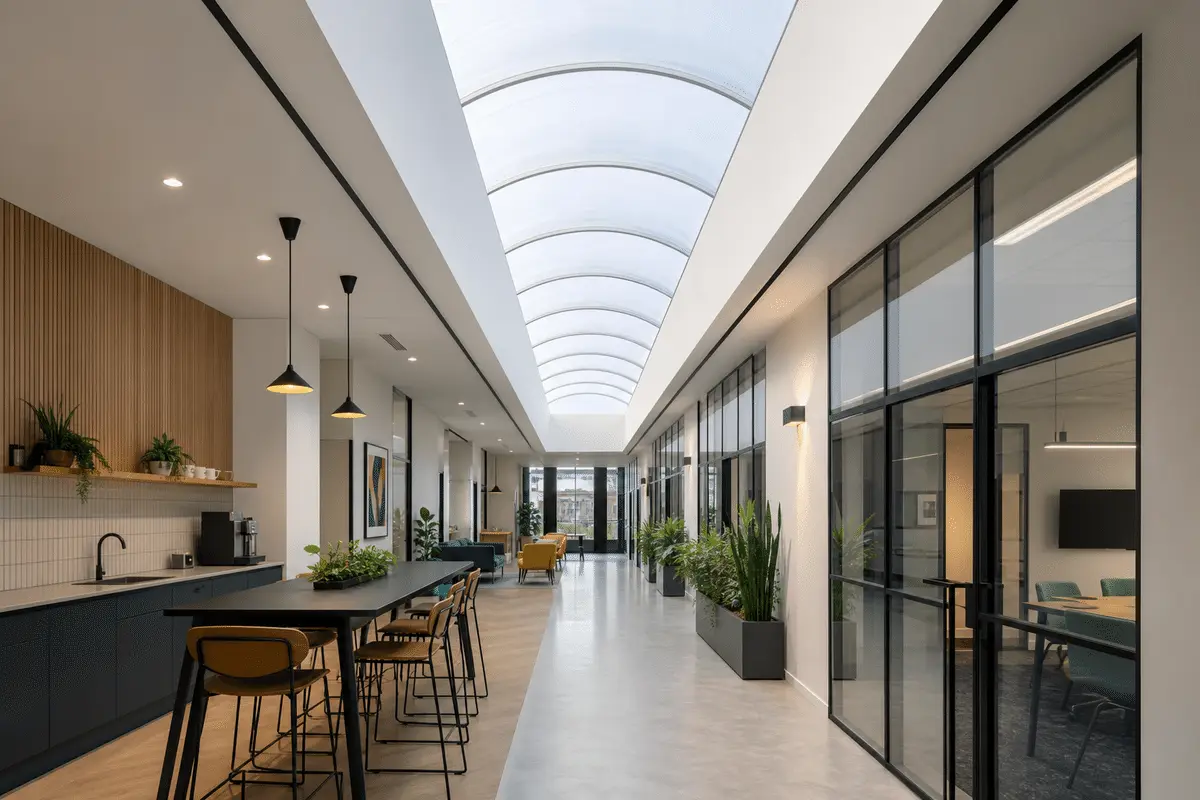
Location: To be confirmed · System: ETFE Skylight
Placeholder: skylight strips bringing daylight into deep office floor plates.
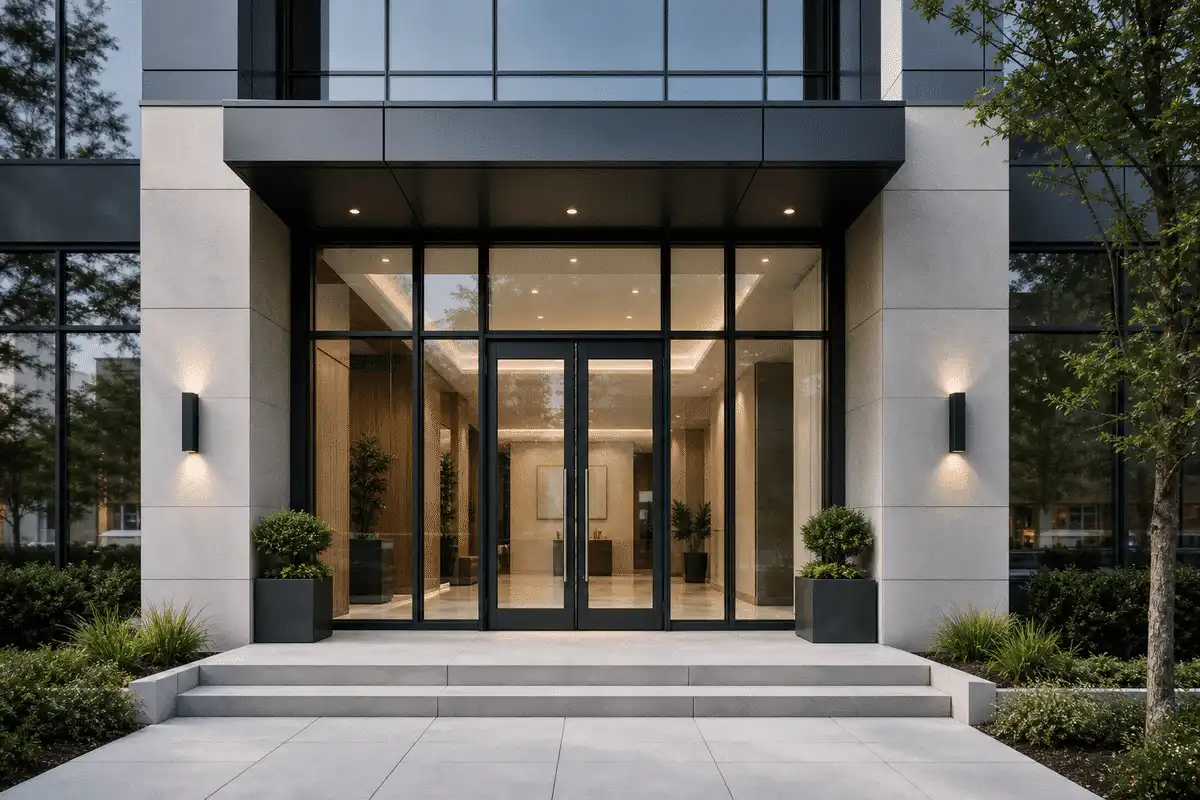
Location: To be confirmed · System: ETFE Canopy
Placeholder: translucent arrival canopy continuing the Office Building ETFE Roof language.
Visuals
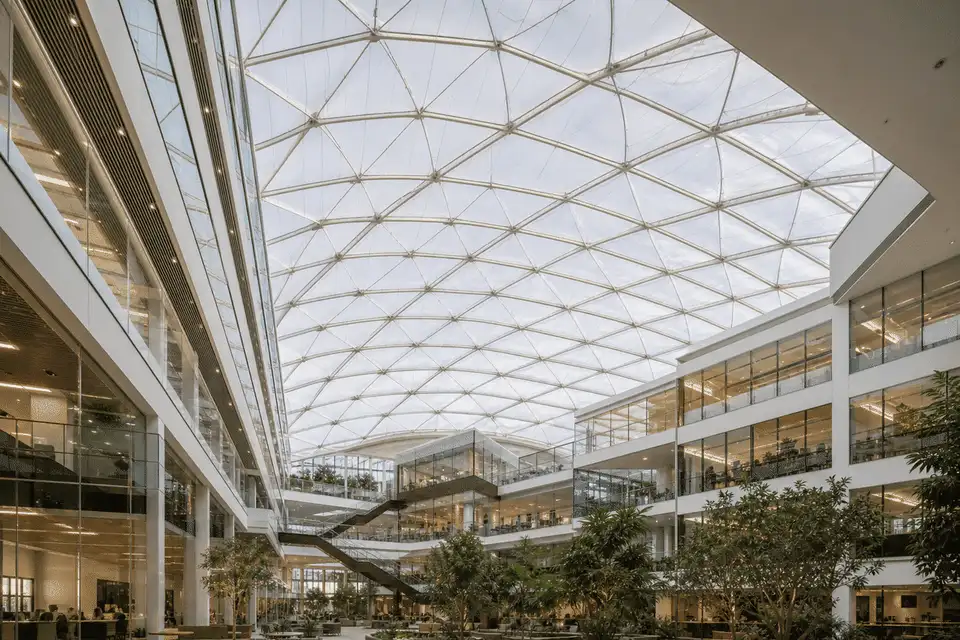
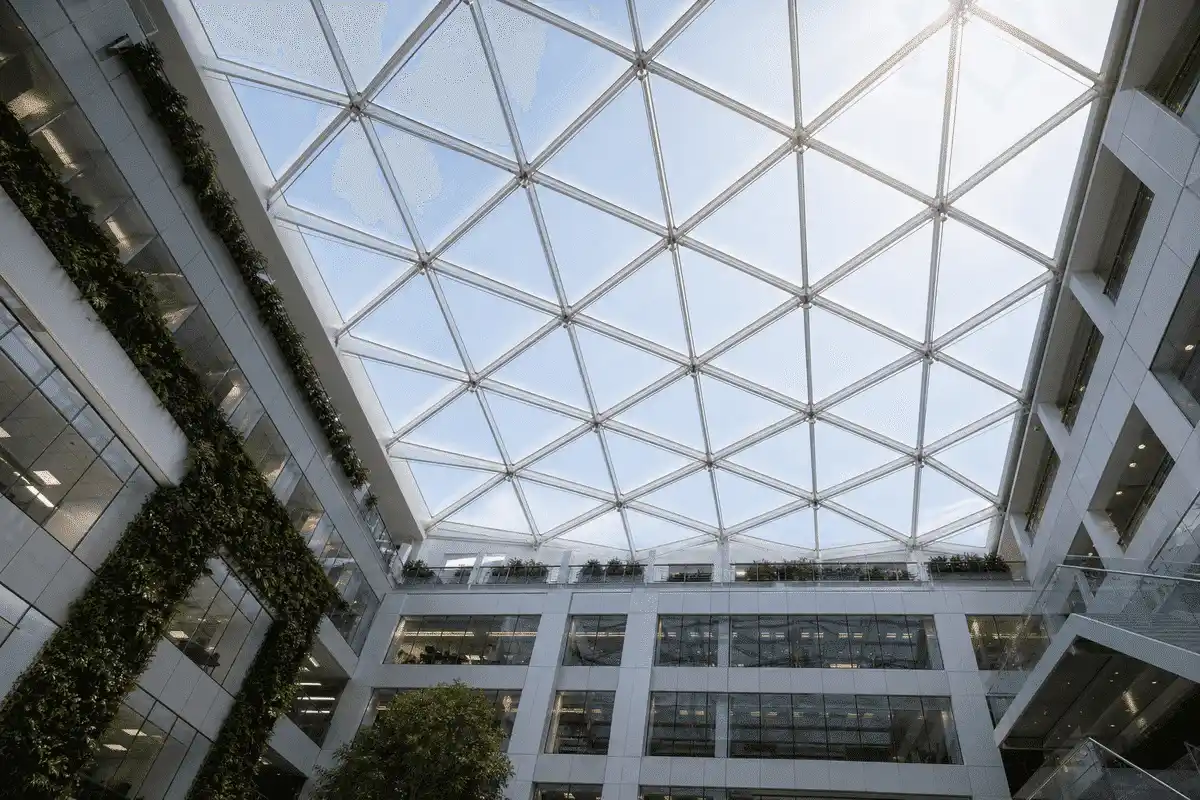
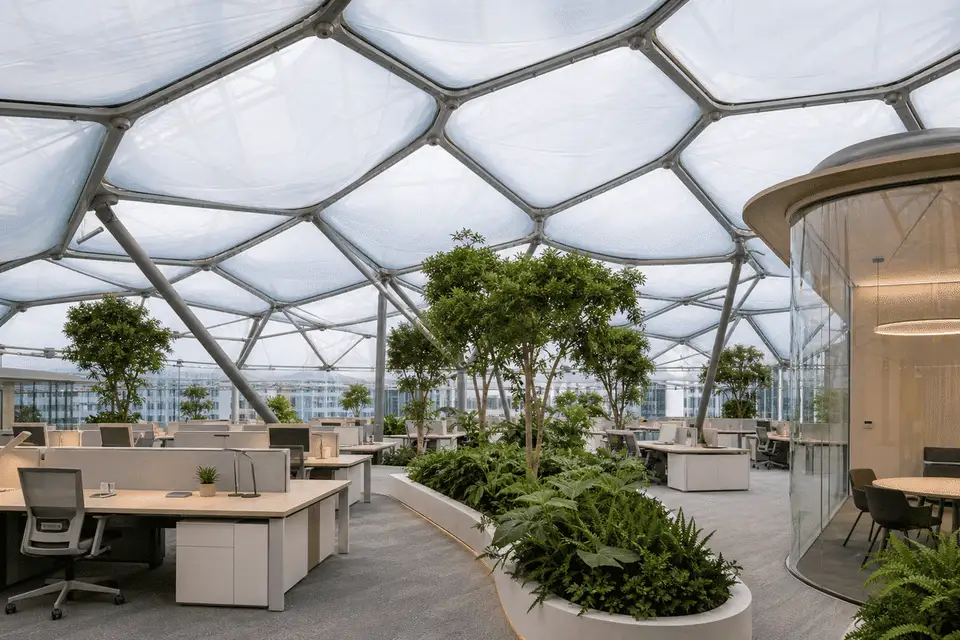
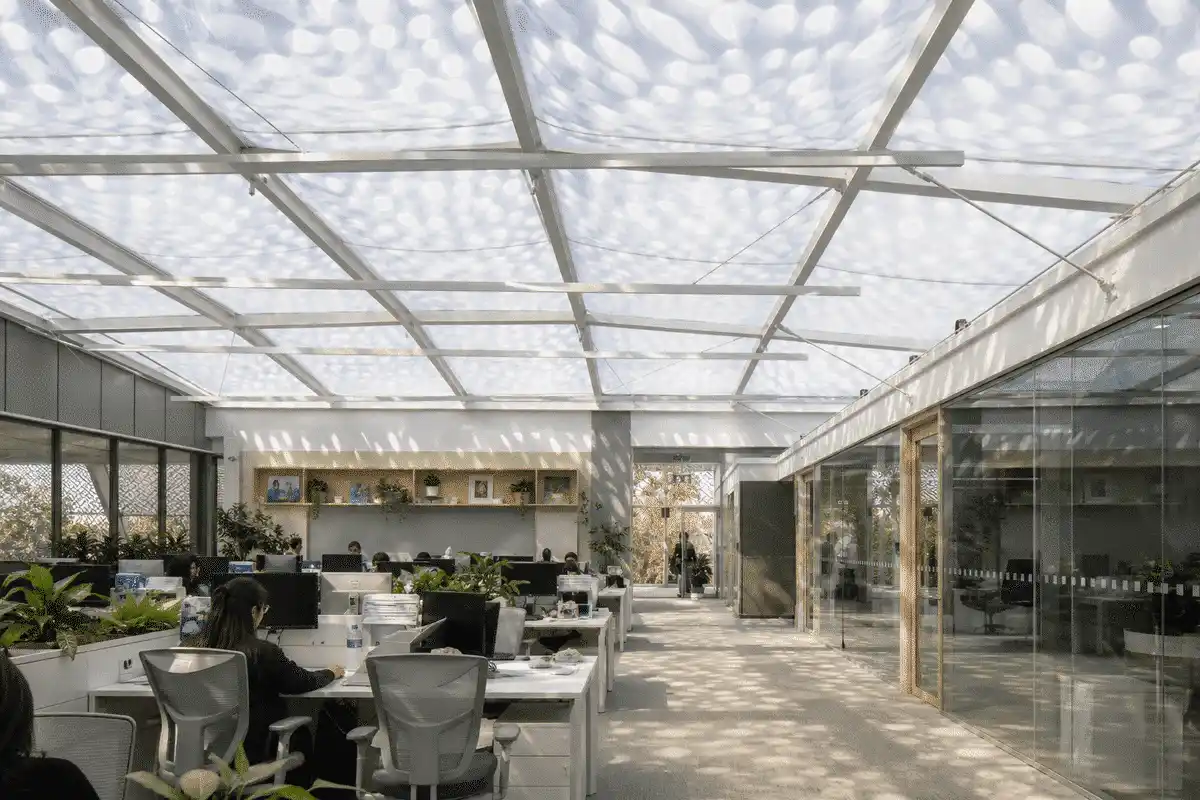
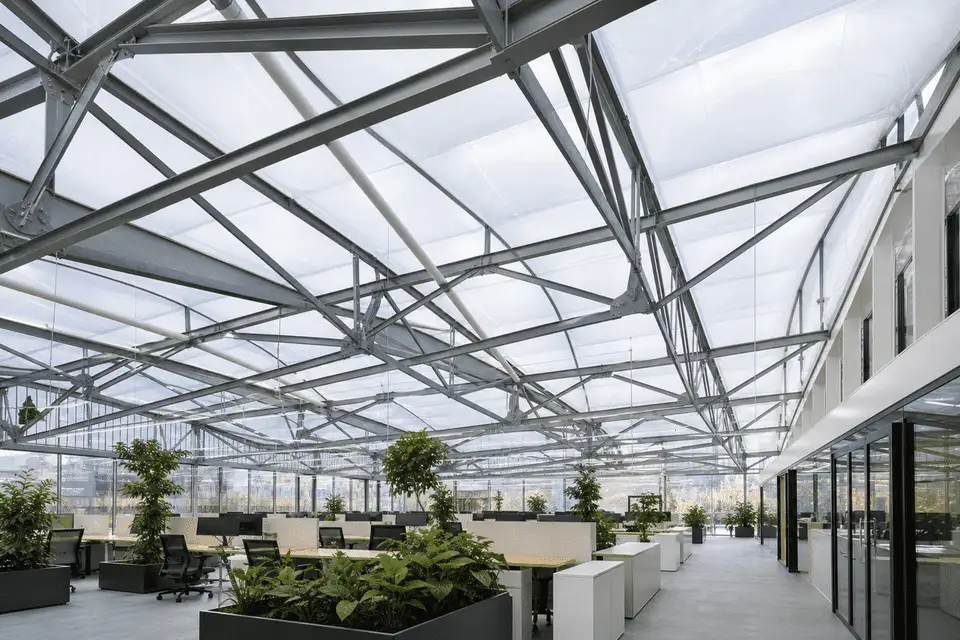
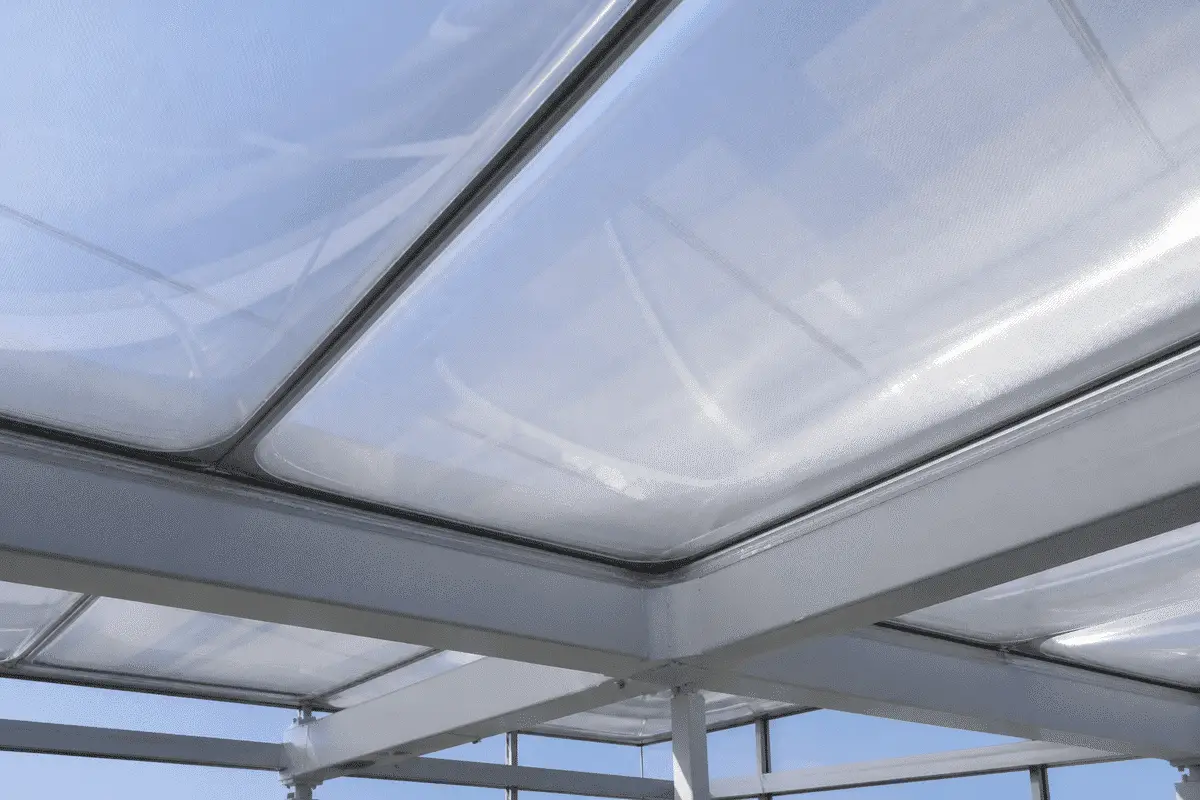
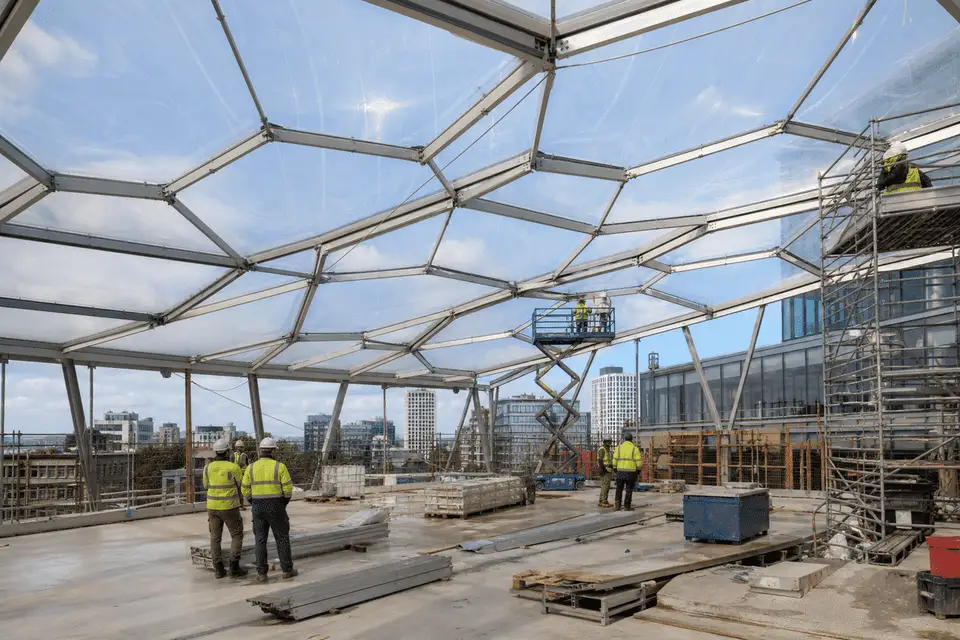
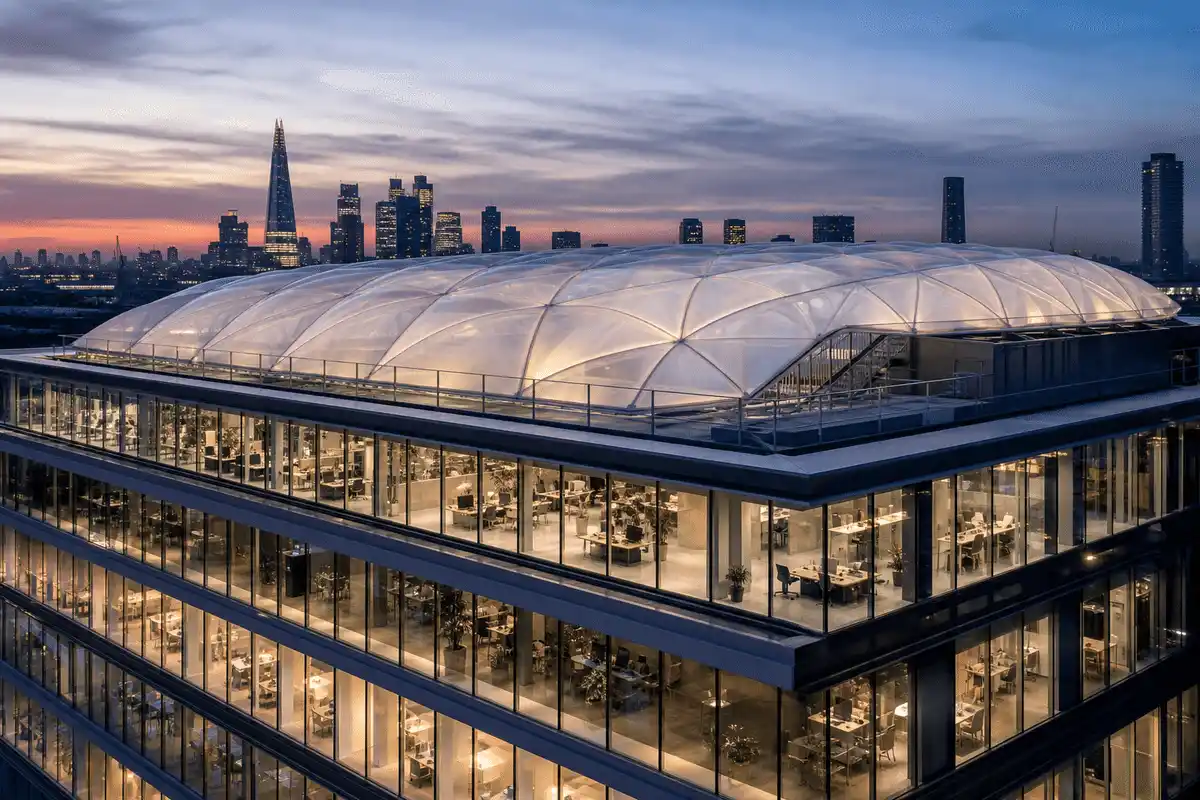
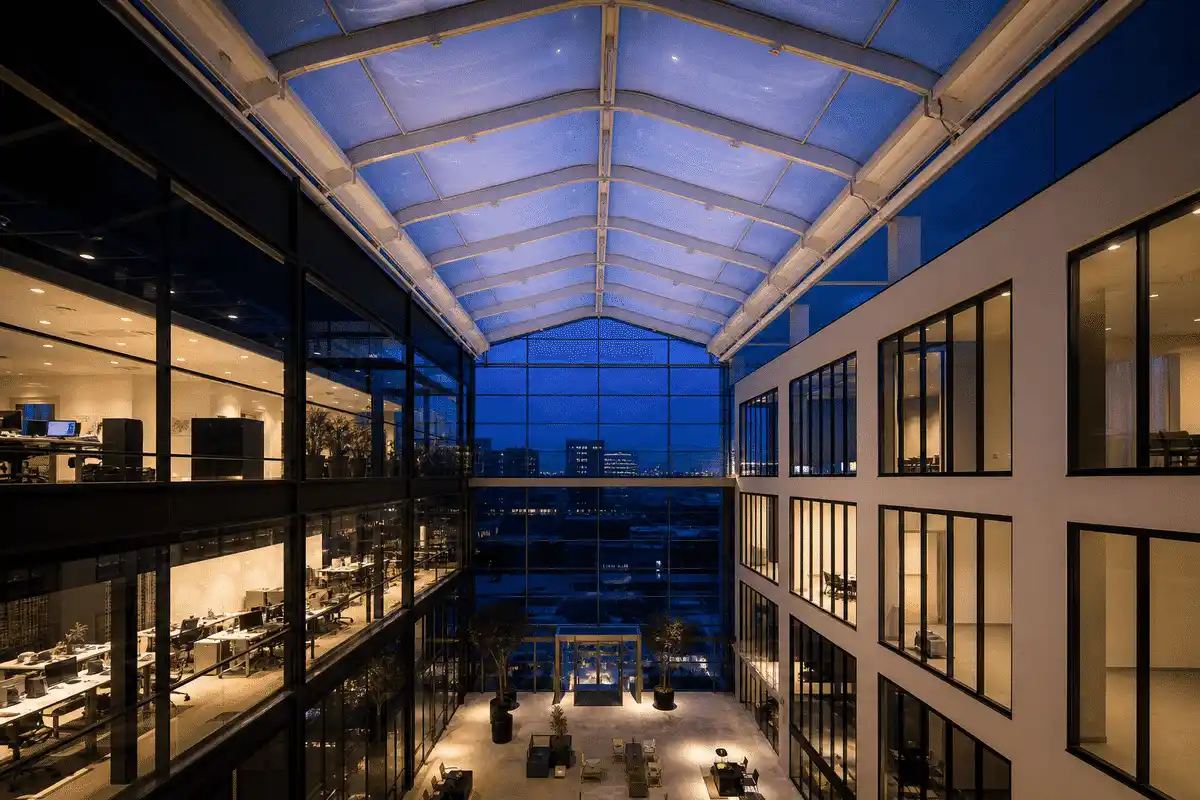
Unique visuals for Office Building ETFE Roofing — exterior, interior, structure, construction, night and detail.
Media
Poster-first thumbnails only. Captions reference knowledge/VIDEOS.md — players are not embedded.
Material Comparison
High-level comparison from ETFE introduction knowledge for early design decisions. Project engineering always governs.
| Feature | ETFE | Glass | Polycarbonate |
|---|---|---|---|
| Weight | Very lightweight (~1% of glass weight) | Very heavy | Medium weight |
| Light Transmission | Up to 95% natural daylight | 80–90% | 70–88% |
| UV Resistance | Excellent, does not yellow | Excellent | Good; may yellow over time if lower quality |
| Maintenance | Self-cleaning due to non-stick surface | Requires regular cleaning | Requires periodic cleaning |
| Design Flexibility | Curved, free-form, pneumatic cushions | Limited by weight | Curved but limited span |
| Service Life | 25–35 years | 30–50 years | 10–20 years |
Explore
Library
Also explore
FAQ
Answers from AAKS FAQ knowledge for Office Building ETFE Roofing — no invented ratings.
High-performance ETFE film systems — large-span roofing, skylights and multi-layer air cushions — for lightweight transparent or translucent envelopes suited to this sector.
Daylight-rich workplaces with reduced structural mass. Light transmission up to 95% supports luminous atria and skylights.
A multi-layer ETFE assembly inflated with low-pressure air for stiffness, thermal performance and luminous lightweight roofs.
Single-layer suits many canopies; cushions are preferred for insulation and larger modular roof fields. AAKS advises after reviewing spans and climate.
Typical guidance is 25–35+ years depending on design, environment, detailing and maintenance.
Daylighting reduces lighting demand; multi-layer cushions and fritted films help manage thermal and solar performance.
Self-extinguishing and does not promote flame spread. Fire strategy follows tested systems and local codes.
Yes when engineered for the site. Cushion systems can exceed 200 km/h wind depending on structural design.
Yes — freeform and double-curved geometry with the right cable, frame or grid structure.
Request a Quote, email info@aaksarchitecture.com, or call +91-9810882452. New Delhi office.
Tell us your Office Building ETFE Roofing brief — AAKS will recommend the system and support design, supply and installation. +91-9810882452 · info@aaksarchitecture.com · Chhattarpur Pahari, South Delhi.