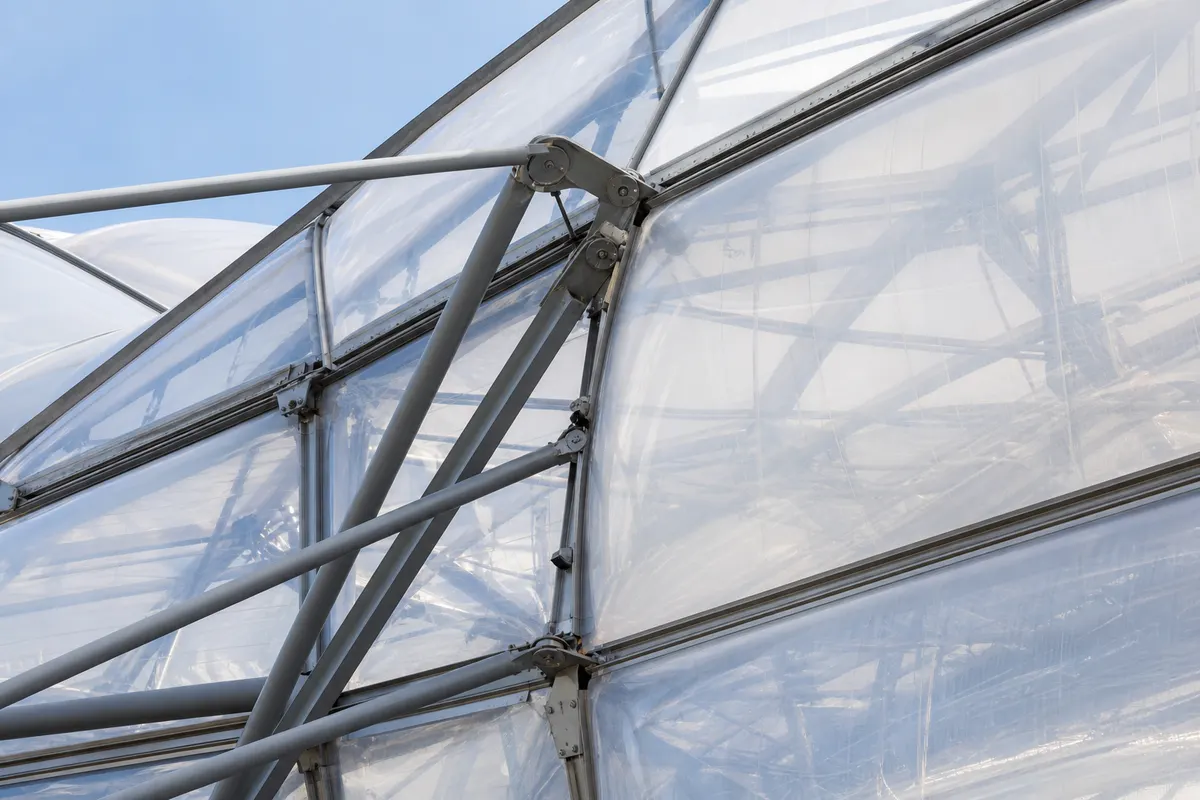


What Makes ETFE Film Different
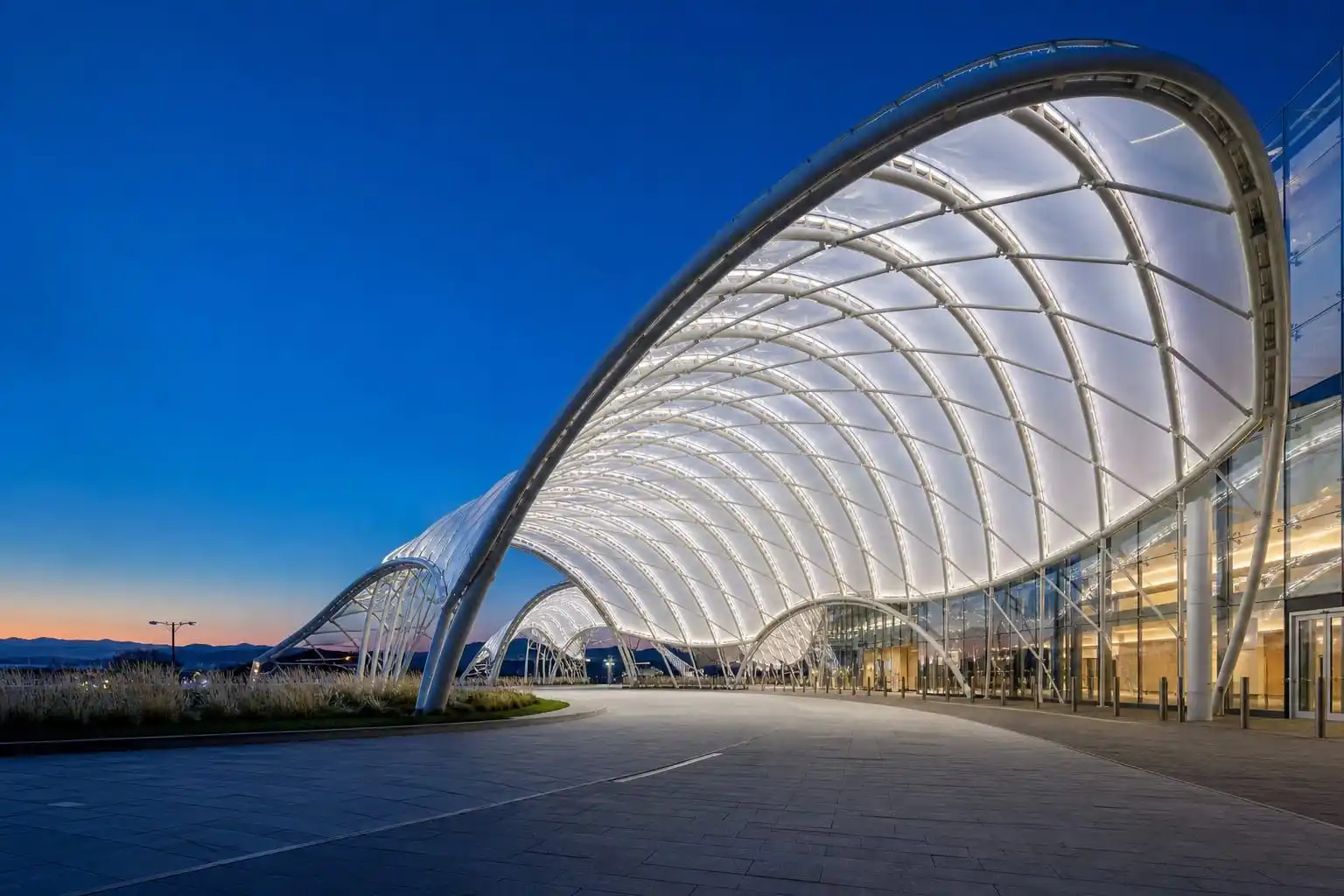
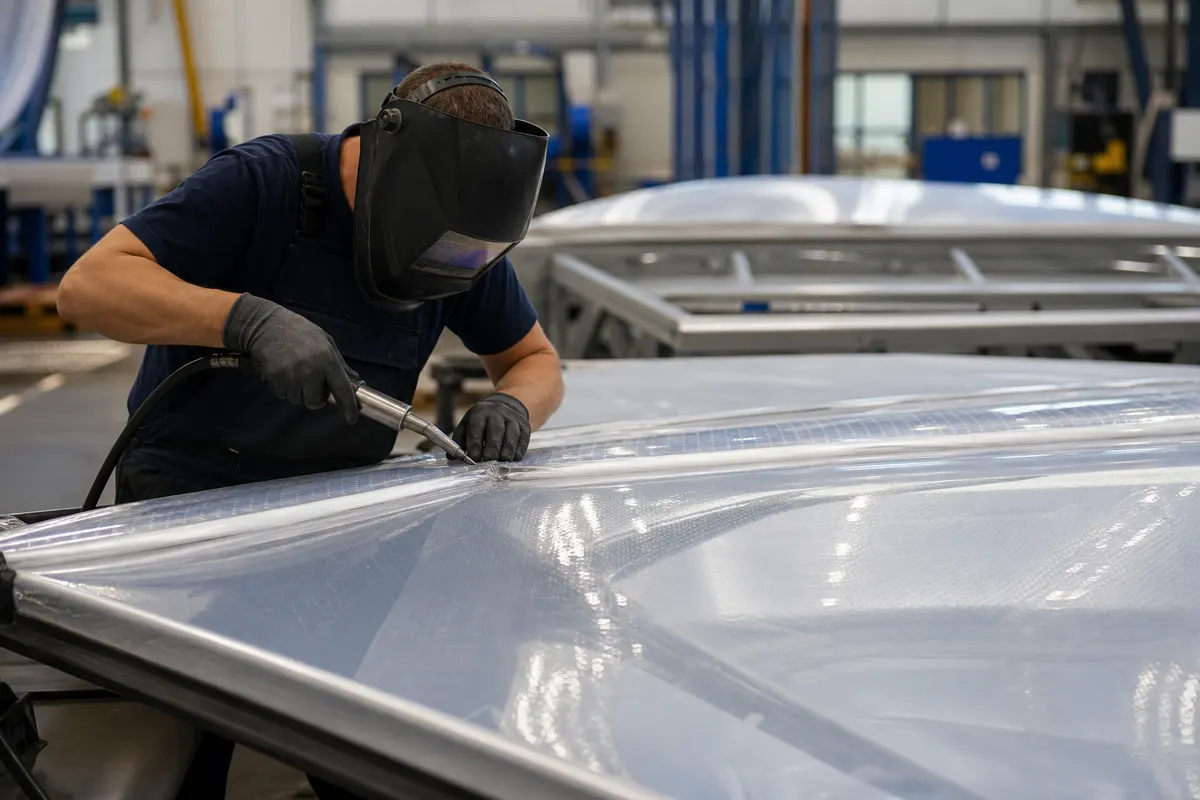
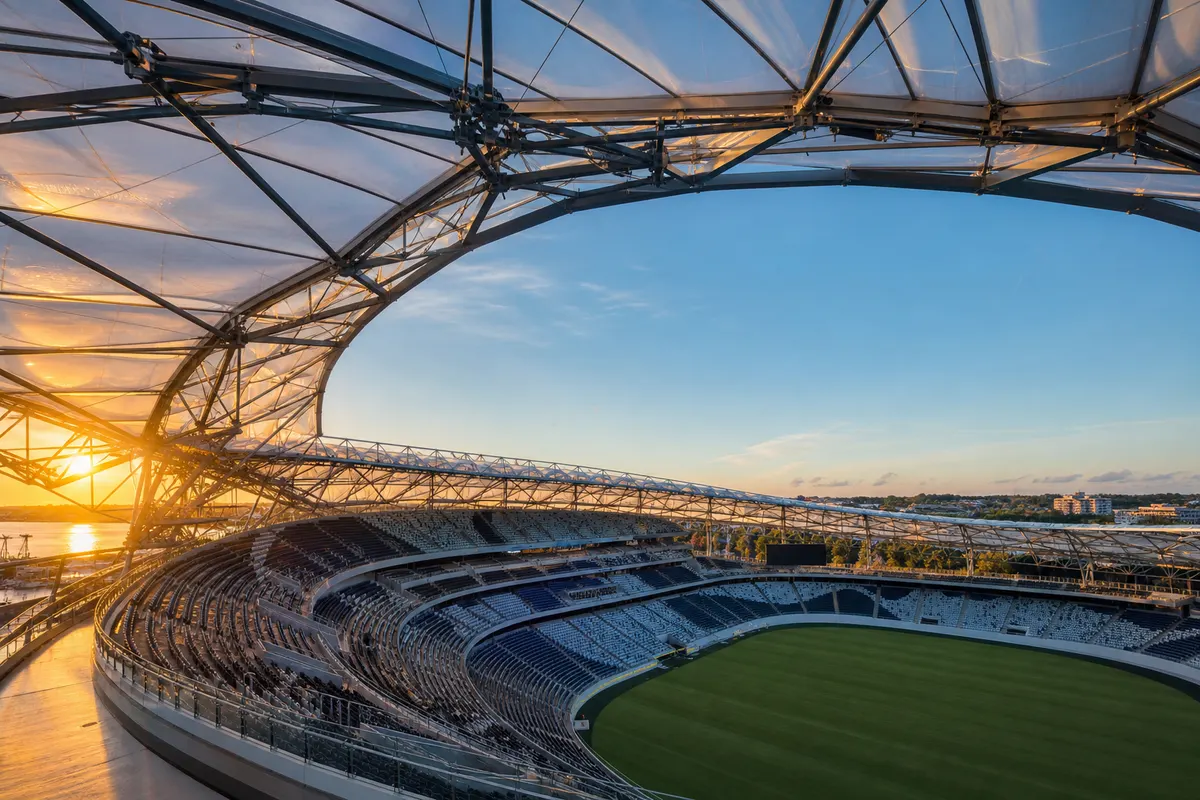
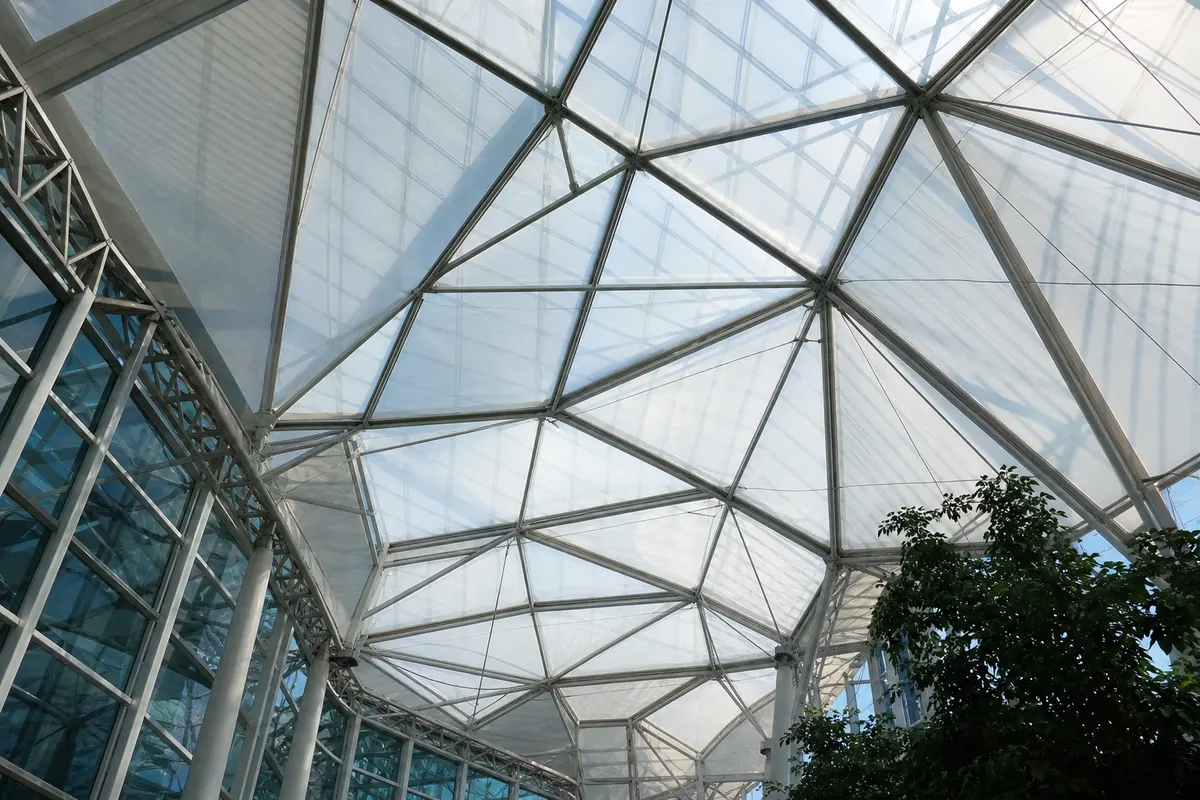
Ethylene Tetrafluoroethylene, better known simply as ETFE, belongs to the fluoropolymer family of engineered plastics — the same chemical lineage that gives non-stick cookware its legendary surface performance. In architectural form, ETFE is drawn into thin, optically clear film and welded into single-layer membranes or multi-layer air cushions. Unlike glass, which relies on mass and rigidity to resist load, ETFE performs through tension, flexibility and internal air pressure — a fundamentally different structural logic that unlocks lighter buildings, longer spans and more expressive geometry.
For architects and engineers researching ETFE film supplier and manufacturer options in India, the material's appeal comes down to a rare combination: near-glass transparency at roughly one percent of the weight, decades of proven outdoor durability, and a self-cleaning surface that keeps maintenance budgets low. AAKS Architecture supplies transparent ETFE film, printed and fritted variants, and complete cushion systems engineered for the Indian climate — from monsoon rainfall to high summer UV loads.